


Species:
Cliff Swallow
Time in Care:
Various
Status:
Released
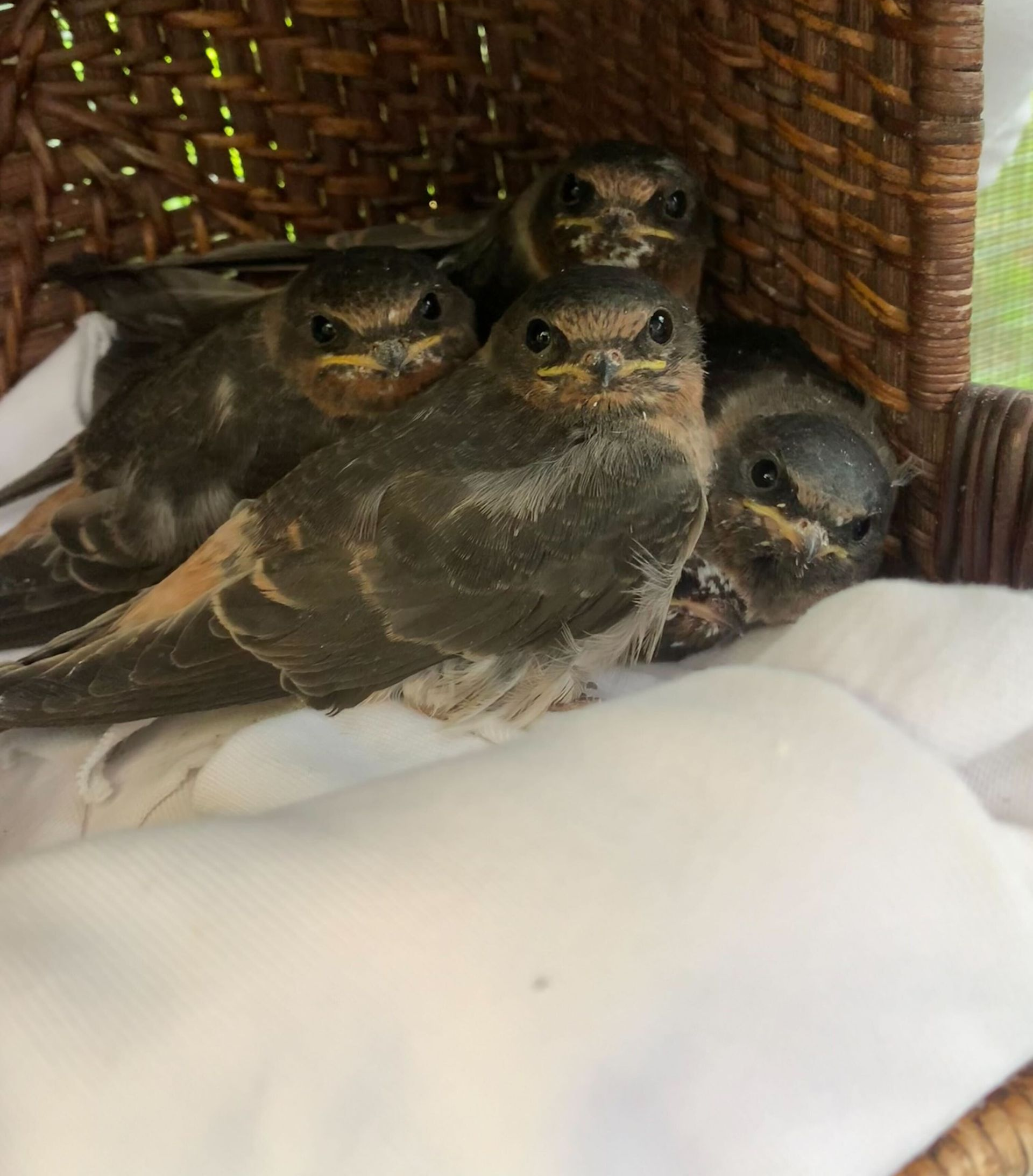
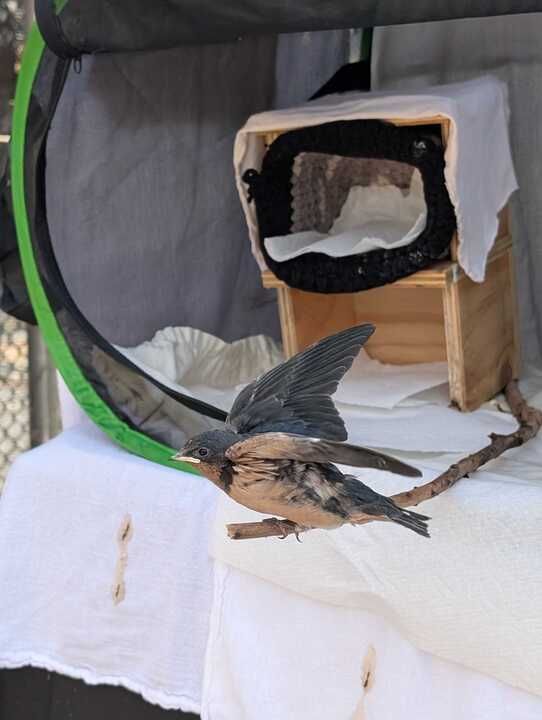
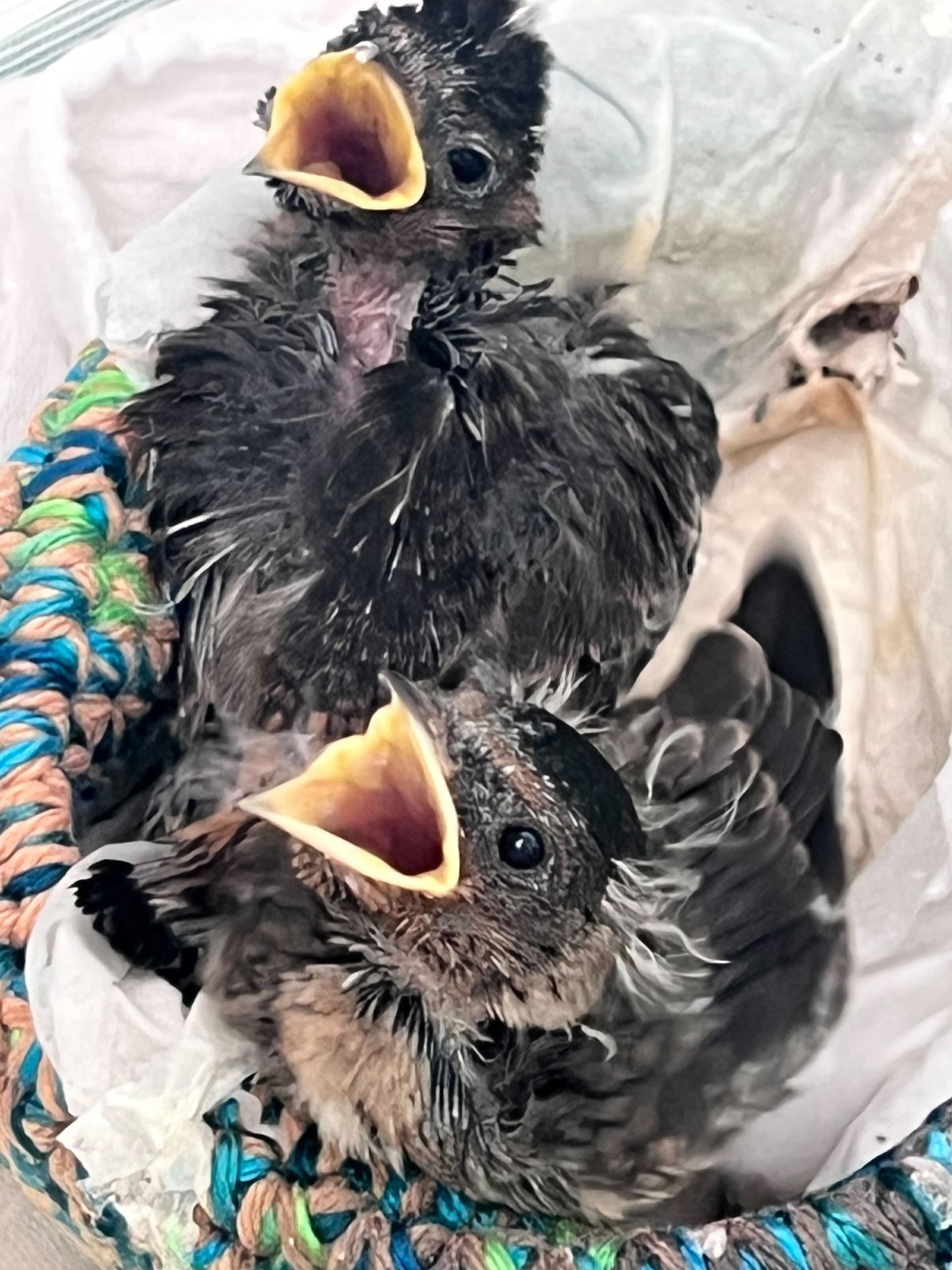
If we had to pick one species that lingers in our memories this year at SBWCN it would be the Cliff Swallow. Not only are these sociable birds fascinating to watch in flight, but SBWCN released 51 cliff swallows this year. These birds were so numerous at our center that our biggest aviary was delegated solely for swallow usage for months during baby season. Supporting dozens of fledgling and juvenile cliff swallows is no easy task. Each of the chicks needed to be fed every half hour, individuals that needed extra supportive care had to be carefully tracked amongst the throngs of birds, and releases needed to be coordinated in groups and with special attunement to how these birds were socialized.
As for the reason so many cliff swallows were in care this year, swallows nest through building mud and stick structures in the eaves of buildings which may fall through natural or fabricated means. Almost all of the swallows in care were brought to us as orphans due to nest collapse, and for as many healthy swallows we took in, bruised and injured ones were three times as common. Perhaps the most challenging detail of all when caring for cliff swallows is that these birds migrate. All of our patients in care needed to be hale and healthy to be released in time with migration patterns. Releasing the last batch of swallows was a cathartic and triumphant moment for SBWCN in 2025.
Cliff Swallow facts:
- Cliff swallows build gourd-shaped mud nests attached to cliffs, bridges, or buildings.
- As insectivores, cliff swallows are adapted to catching their diet of insects in midair.
- These birds migrate between North and South America, traveling over 6,000 miles each way between their breeding and wintering grounds.
- Originally, they nested only on natural cliffs, but as humans built bridges, overpasses, and buildings, swallows adapted. Now, many colonies thrive on man-made structures.

