Species:
Coyote
Time in Care:
90 Days
Status:
Transferred for Continued Care
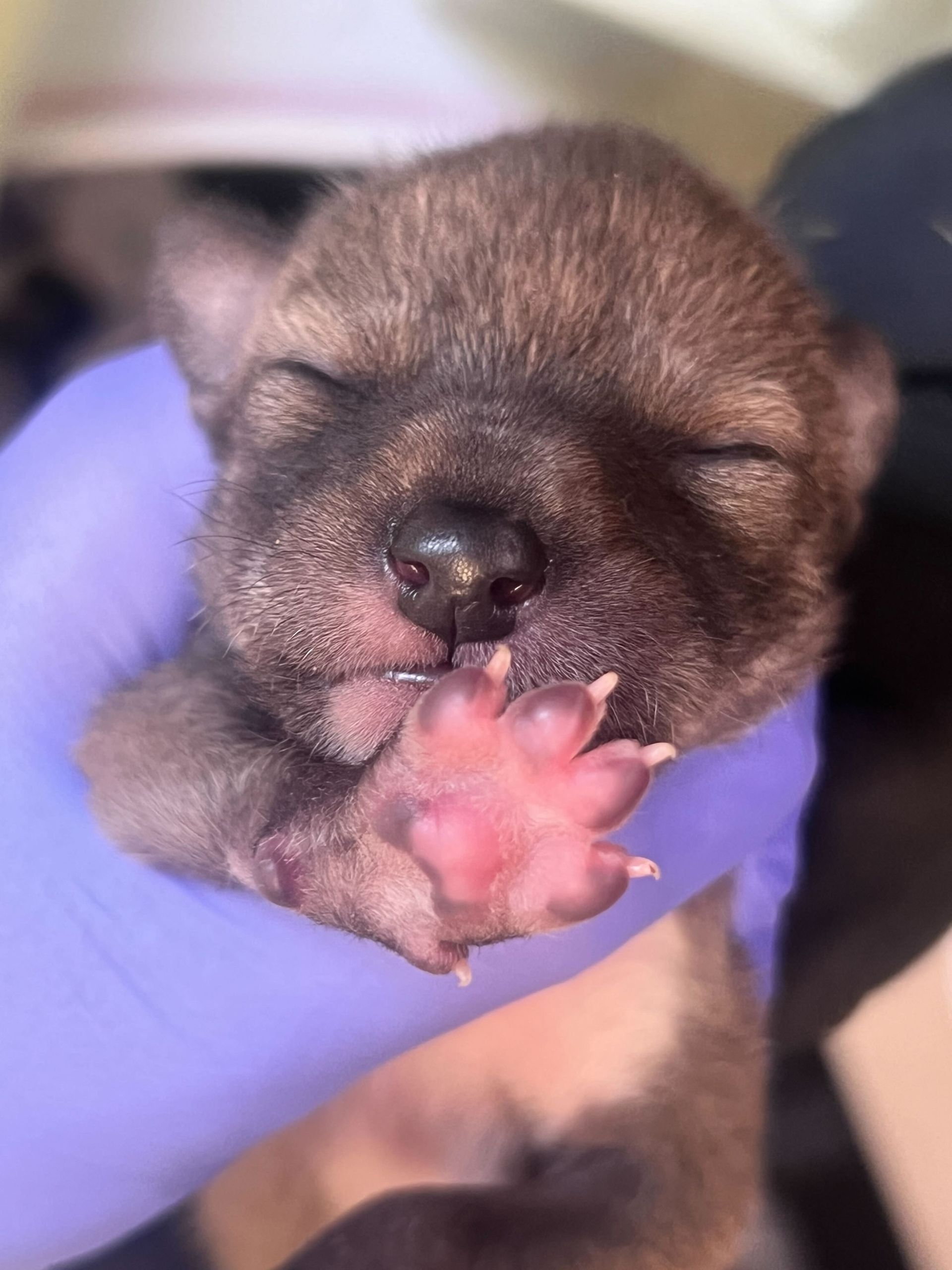
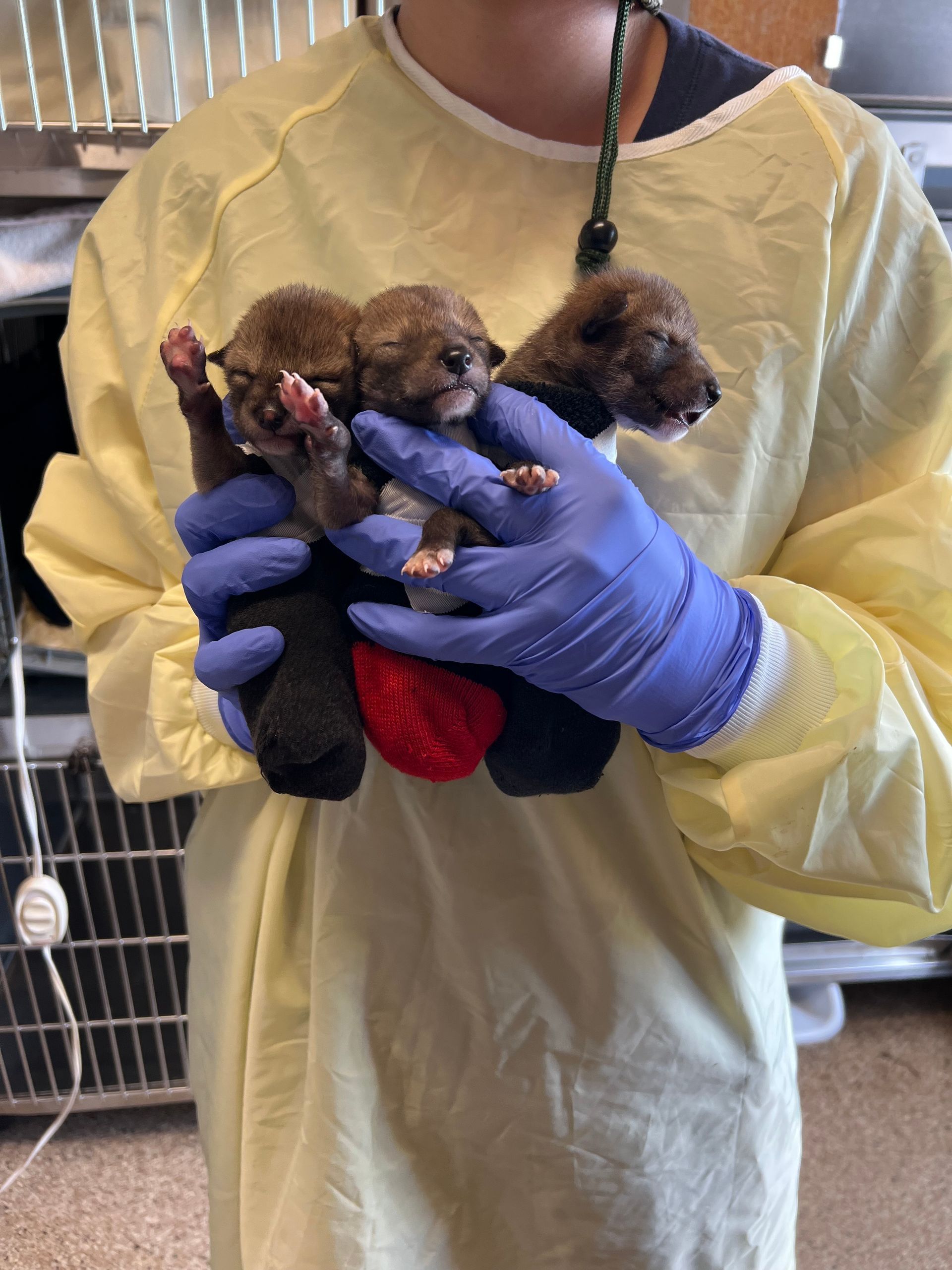
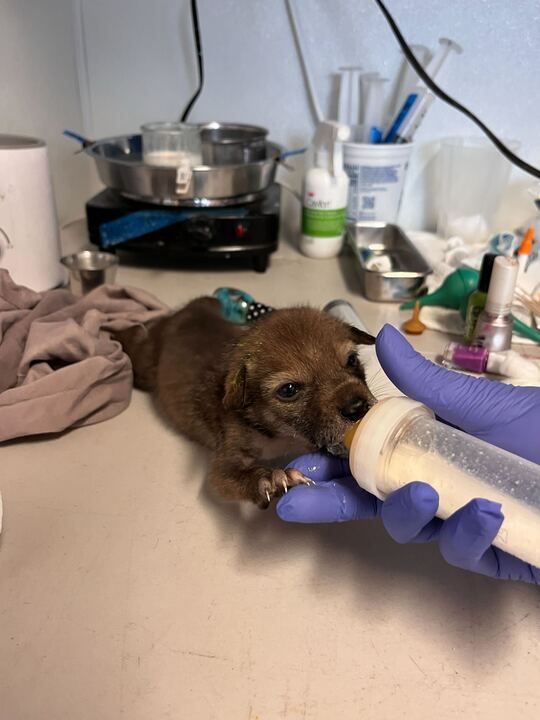
Our next animal to share with you is actually four! A litter of coyote pups were brought into SBWCN on April 4th after being found orphaned. These pups were neonates when they were brought in and among the first coyotes we have cared for in infancy. These pups came to us dehydrated and in desperate need of continued supportive care to survive. Our mammal team was sure to give them supporting medication and nutrition all while measuring them, feeding them, making sure they were defecating properly (fun, right?), and watching their habits closely.
Because they had come to us so young our center was able to support these pups for three long months, in June they were moved from our mammal nursery to our mammal enclosures. As they continued to grow SBWCN was so excited to transfer them to a large mammal facility equipped to care for them during the next stage of their lives so that they would have the best care until release.
Coyote Facts:
- Coyote pups are born blind, deaf, and helpless only opening their eyes roughly 10 days after birth.
- Coyotes form tight-knit family units of usually one mated pair and their pups. A bonded pair of coyotes will often remain that way for life.
- Coyotes are highly effective natural pest managers predating on rodents, rabbits and squirrels, but they also are important in regulating mesopredator populations as well, keeping racoon, skunk, and feral cat populations under control.
- A coyote will also eat fruit and seeds, dispersing them when defecating and helping the distribution of native species.
- Coyotes are keystone species in many areas, meaning their presence has a disproportionately large impact on the health of an ecosystem.