


Species:
Pigeon Guillemot
Time in Care:
41 Days
Status:
Released
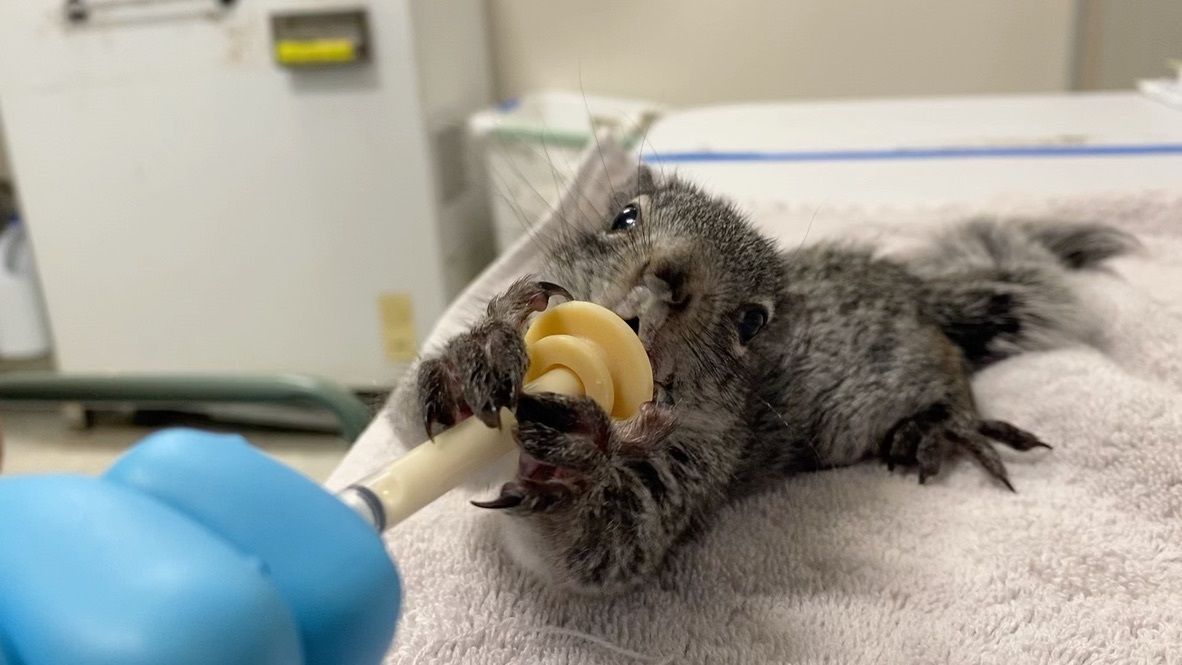
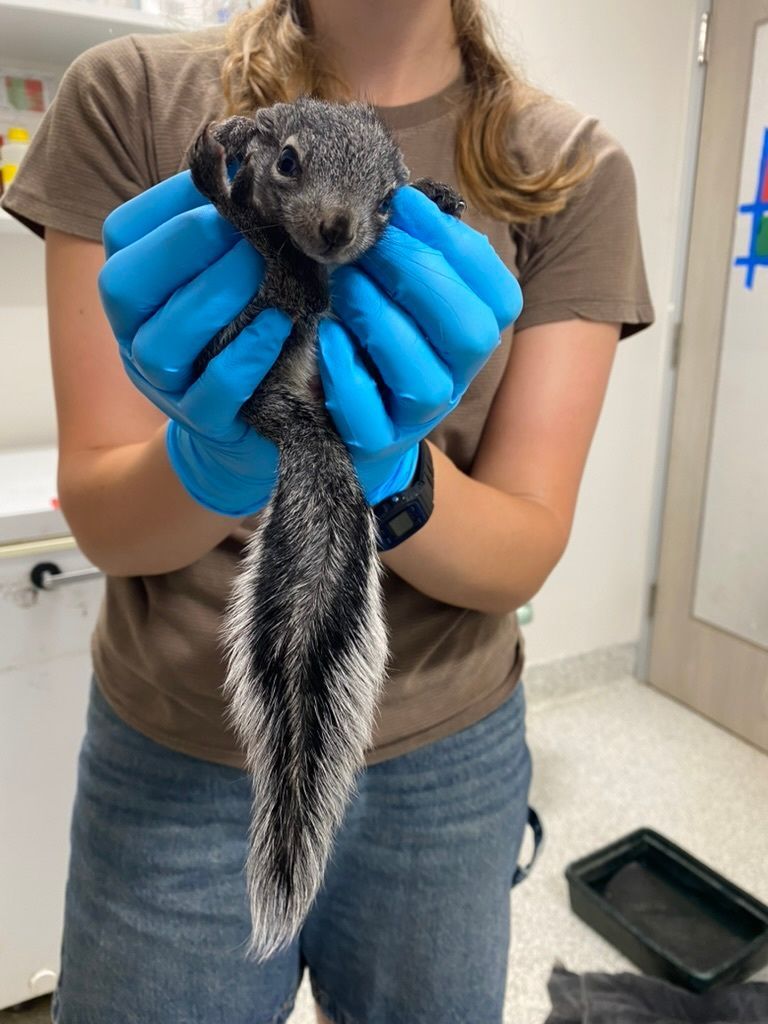
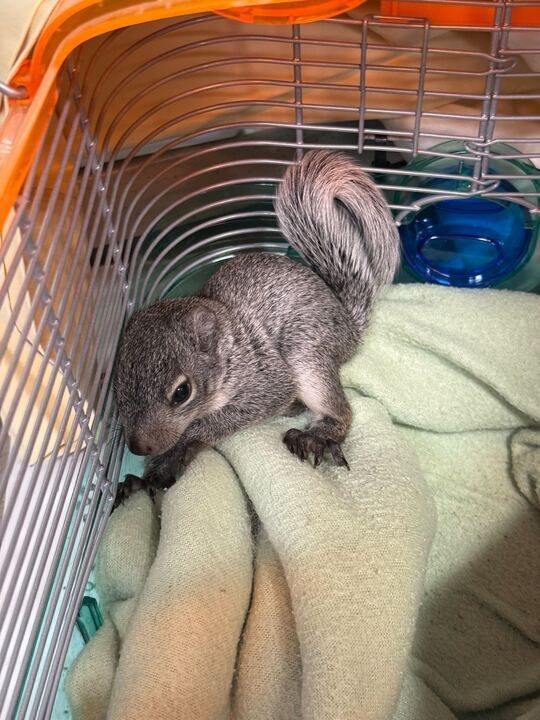
If we observe the world around us closely, squirrels are one of the most spotted wild animals in Santa Barbara. We see them in the trees, soliciting food, foraging in the chaparral etc. But as common a sight as squirrels may seem, it is always a special day if you spot a western gray squirrel. A rare sight compared to the gregarious fox squirrel, western gray squirrels have a much smaller population size. Patient 3511 is a western gray squirrel that was brought in orphaned and in need of supportive care to grow and thrive. She was given fluids and taken to our mammal nursery where she spent a month growing and healing. Raising a baby squirrel comes with its challenges, our staff needed to make sure she was weaned properly, treated for any issues that may come up in care, and socialized among other squirrels. For a brief window of time 3511 was socialized with some of the fox squirrels in care before graduating from the mammal nursery to one of our outdoor enclosures.
After her move to our outdoor enclosures, 3511 thrived, gaining the weight, confidence, and mobility skills necessary for a successful release. 41 days after she was brought in, 3511 returned to the wild.
Gray Squirrel Facts:
- Western gray squirrels are excellent climbers and jumpers, able to leap up to 10 feet between branches with ease.
- Their long, bushy tails aren’t just for show and are adapted for a myriad of things like for balance, warmth, and communication.
- Western gray squirrels don’t hibernate, but they do become less active in winter, spending more time in their nests and living off food they cached in fall.
- They build large leafy nests high in trees, called dreys.

