Species:
Northern Flicker
Time in Care:
28 Days
Status:
Released
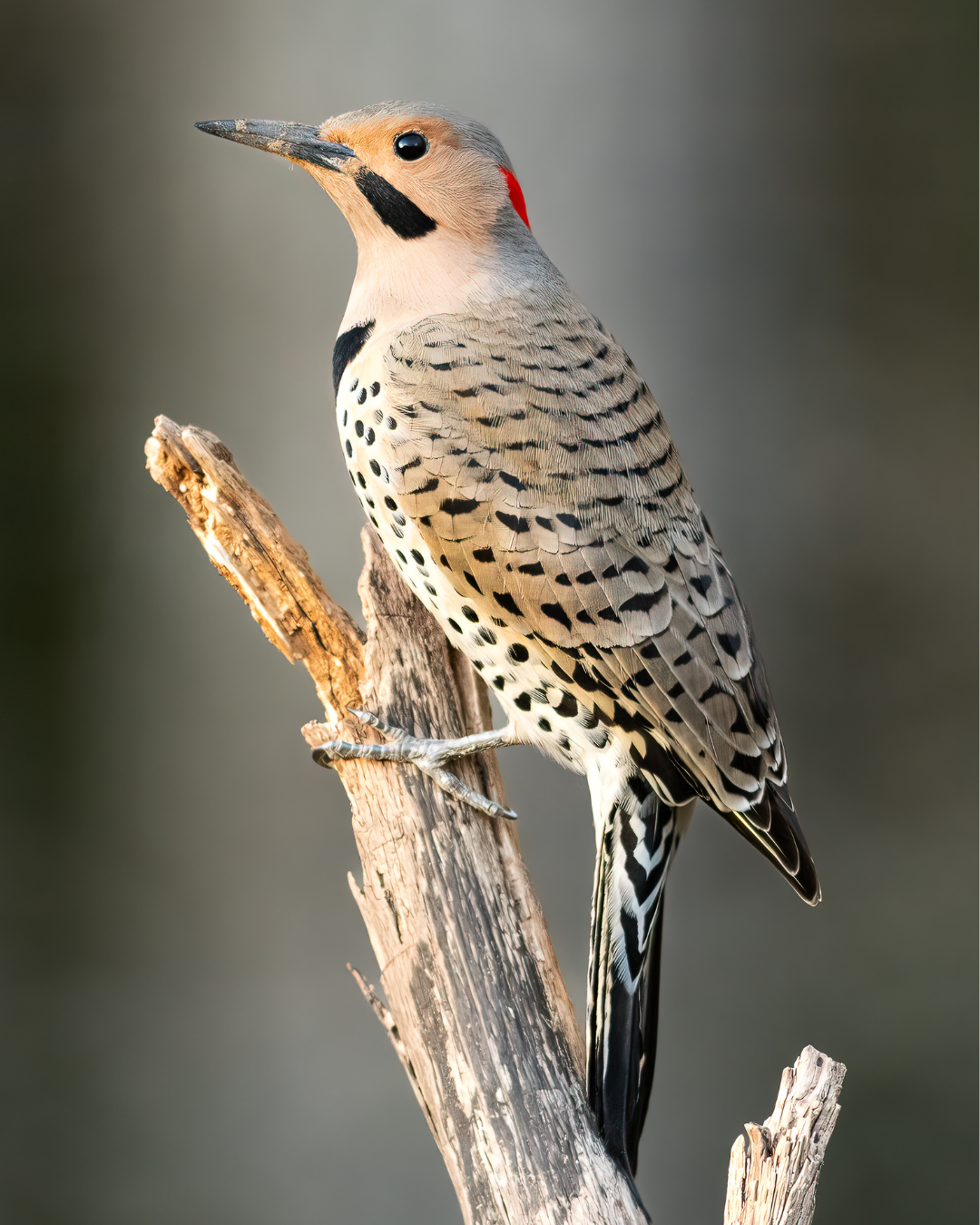
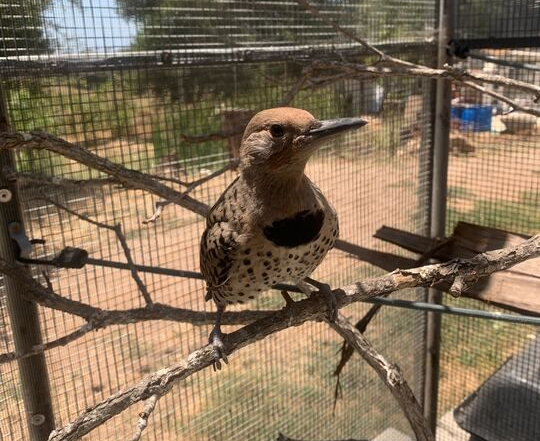
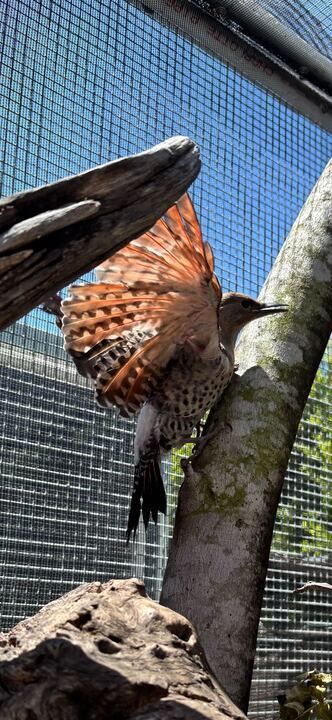
Found displaced from its nest in Ojai, this young Northern Flicker spent 28 days in care at SBWCN growing and healing to be released back into the wild as one of California's most eye-catching birds. The Northern Flicker is a member of the woodpecker family, and is known for its brown feathers, black spotted breast, and shocks of red and yellow plumage. Patient 2004 also bears the unique quality of being the only Northern Flicker in treatment at SBWCN this year. Further evidence showing that he fell from the nest, this bird came to us with bruising on his right side and leg that needed to be watched as he healed. 2004’s recovery was an easy one, with little complication. After it looked like his bruising was on the path to full recovery he was moved to an aviary to fledge and build flight muscles. 28 days later, he was released back into the wild to share his beauty with the world.
Northern Flicker Facts:
- The northern flicker is an insectivore, however unlike other woodpeckers who peck for grubs, the flicker hunts on the ground as well so can sometimes be seen in this unique location.
- A flicker’s tongue is capable of extending two to three inches past its beak. Their tongues are also barbed to help snag insects.
- The northern flicker is one of the few woodpeckers that migrates during the winter.
- Woodpecker skulls are specially adapted for repeated tapping on hard surfaces with thick spongy bone, strong neck muscles, and a special hyoid bone (tongue bone) that wraps around the brain to protect it from impact.