


Species:
Pigeon Guillemot
Time in Care:
17 Days
Status:
Released
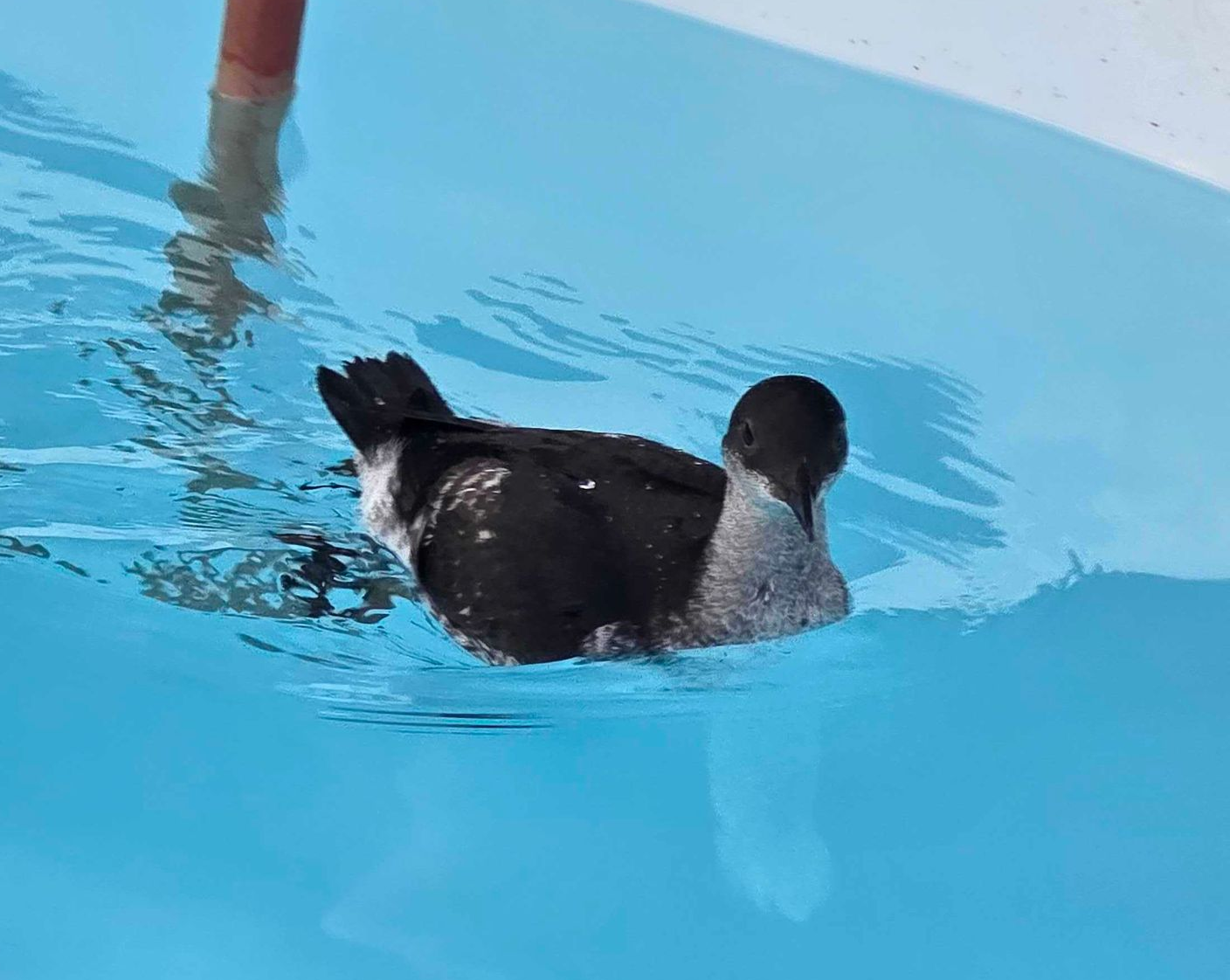
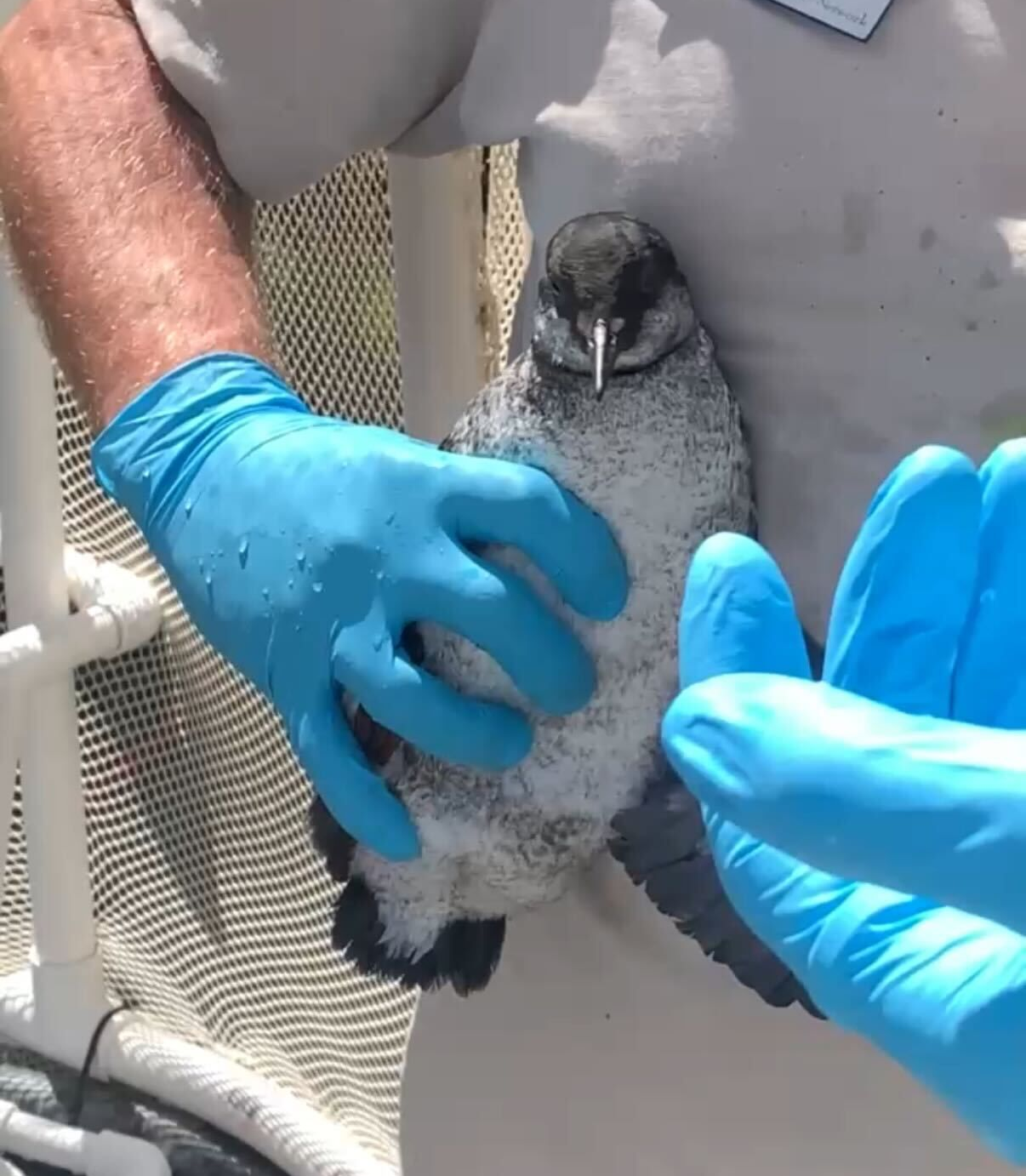
Patient 3237 is a Pigeon guillemot that was admitted into care when he was found beached and oiled on Hendry’s beach. Contrary to their names, pigeon guillemots are not related to the feral pigeons we see around town. Guillemots are pelagic birds, meaning they are adapted to the water and live most of their lives on the ocean so finding one beached means something is awry. Patient 3237 came to us oiled but on intake it was clear there were other issues to be treated as well, it was suspected he had swallowed some string and there was evidence of a corneal ulcer as well. De-oiling a bird is a particularly stressful event so our staff made sure that 3237 was set up for success, treating peripheral issues before moving on to de-oiling.
De-oiling a bird is an intense and heavily structured process with animal care staff needing to move quickly and with precision through several steps for the well being of the bird. 3237 went through this process and was closely monitored afterwards to make sure that he was drying properly and able to maintain his core body temperature. A few days later he was given a second wash as there were lingering traces of oil that was impacting his ability to float for long periods of time. Because guillemots are pelagic they need to be able to float for a full 24 hours before being able to be released, a benchmark 3237 finally crossed after two weeks in care. With close observation for a few days after this impressive feat, he was able to be released with a coastal send-off.
Pigeon Guillemot Facts:
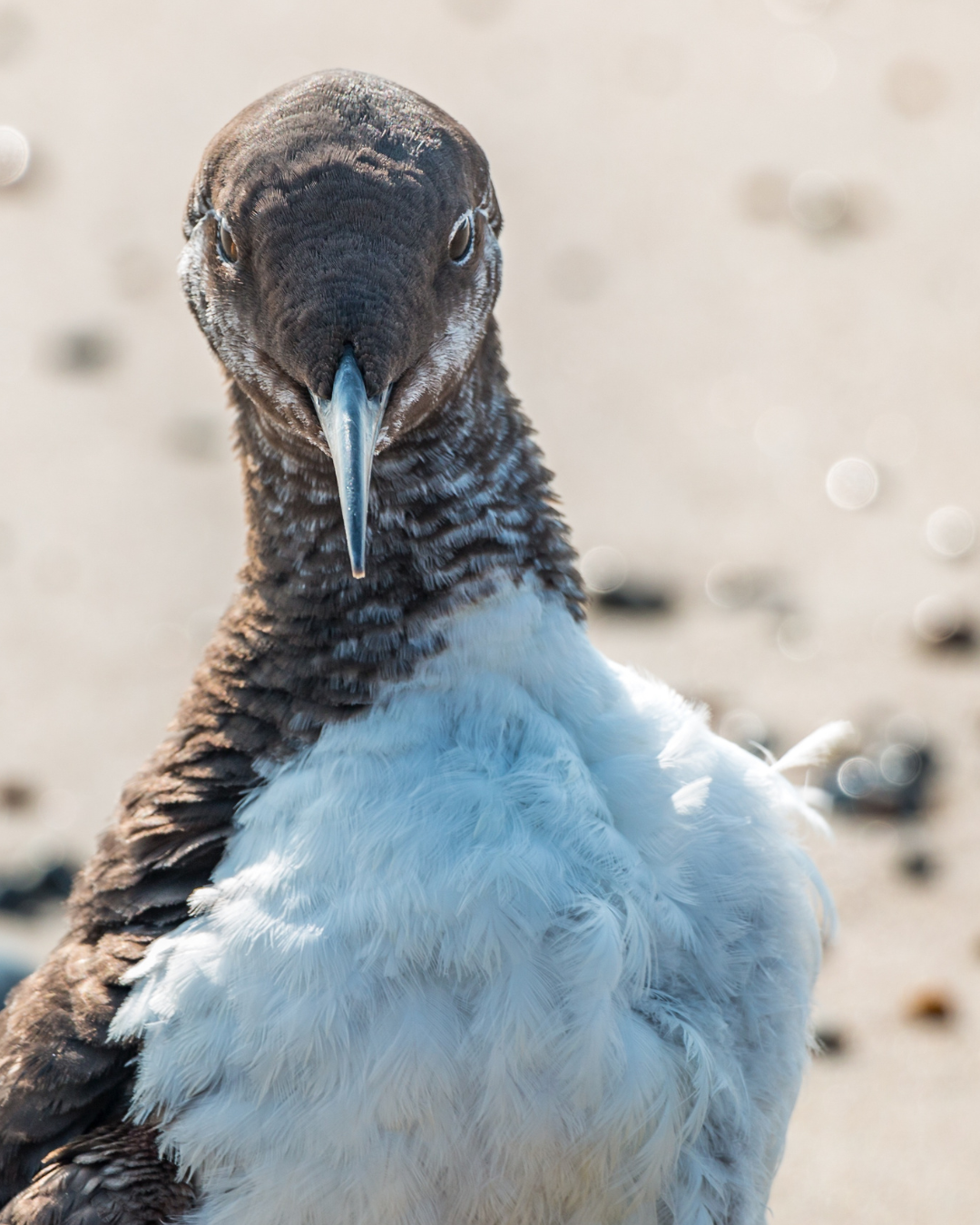
- Pigeon guillemots are diving birds, using their wings to maneuver underwater while chasing fish and invertebrates.
- They're named for their pigeon-like shape and size, but they are actually members of the auk family, related to puffins and murres.
- Breeding pairs often return to the same nesting site year after year.
- While many seabirds go far out to sea, pigeon guillemots tend to stay near shore year-round.
- They prefer nesting on rocky coasts, cliffs, and islands, often using natural crevices or burrows to lay their eggs well-hidden from predators.

