Species:
Southern Alligator Lizard
Time in Care:
12 Days
Status:
Released
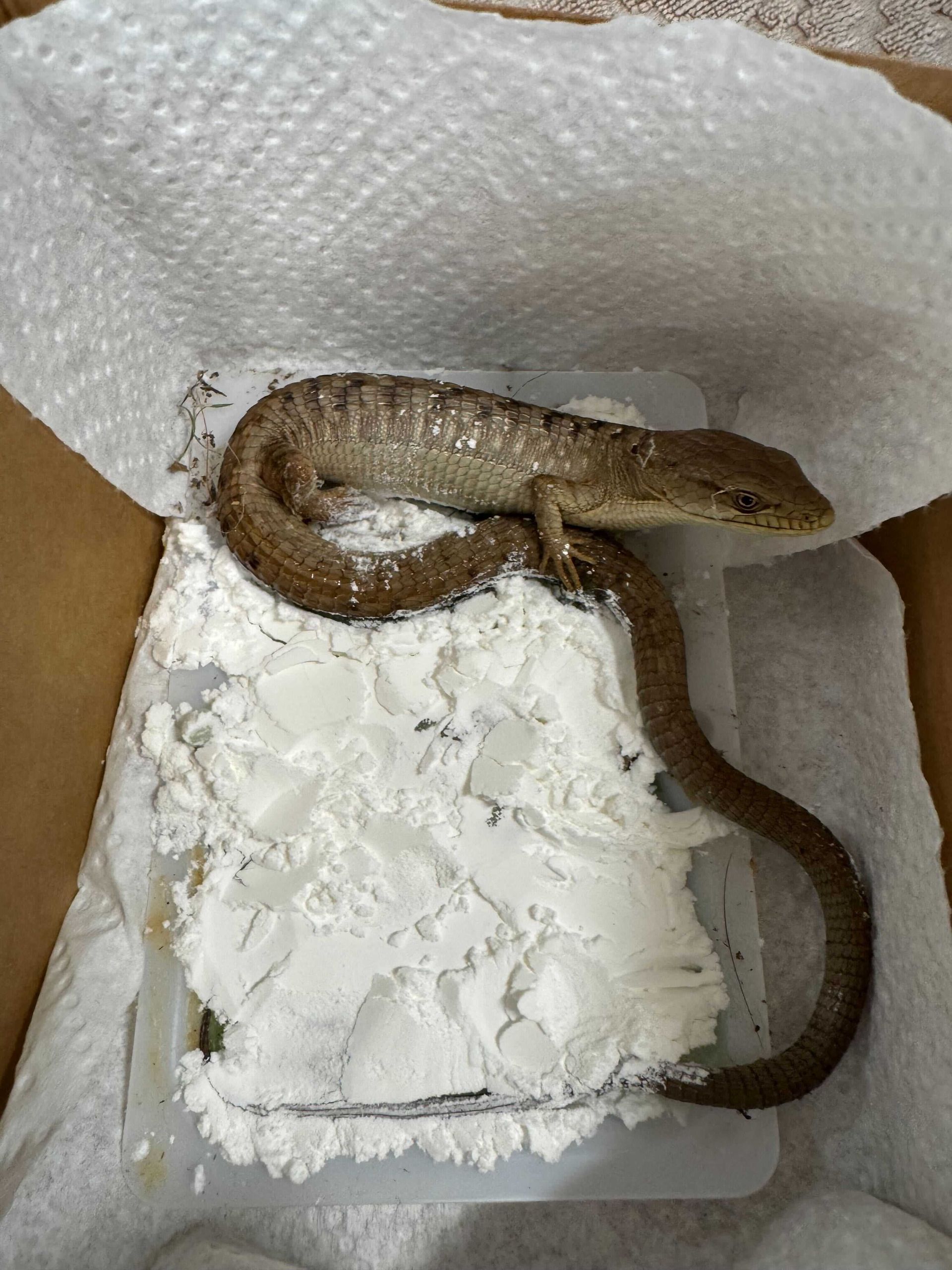
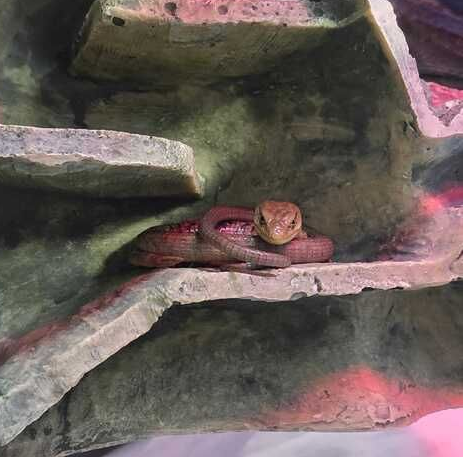
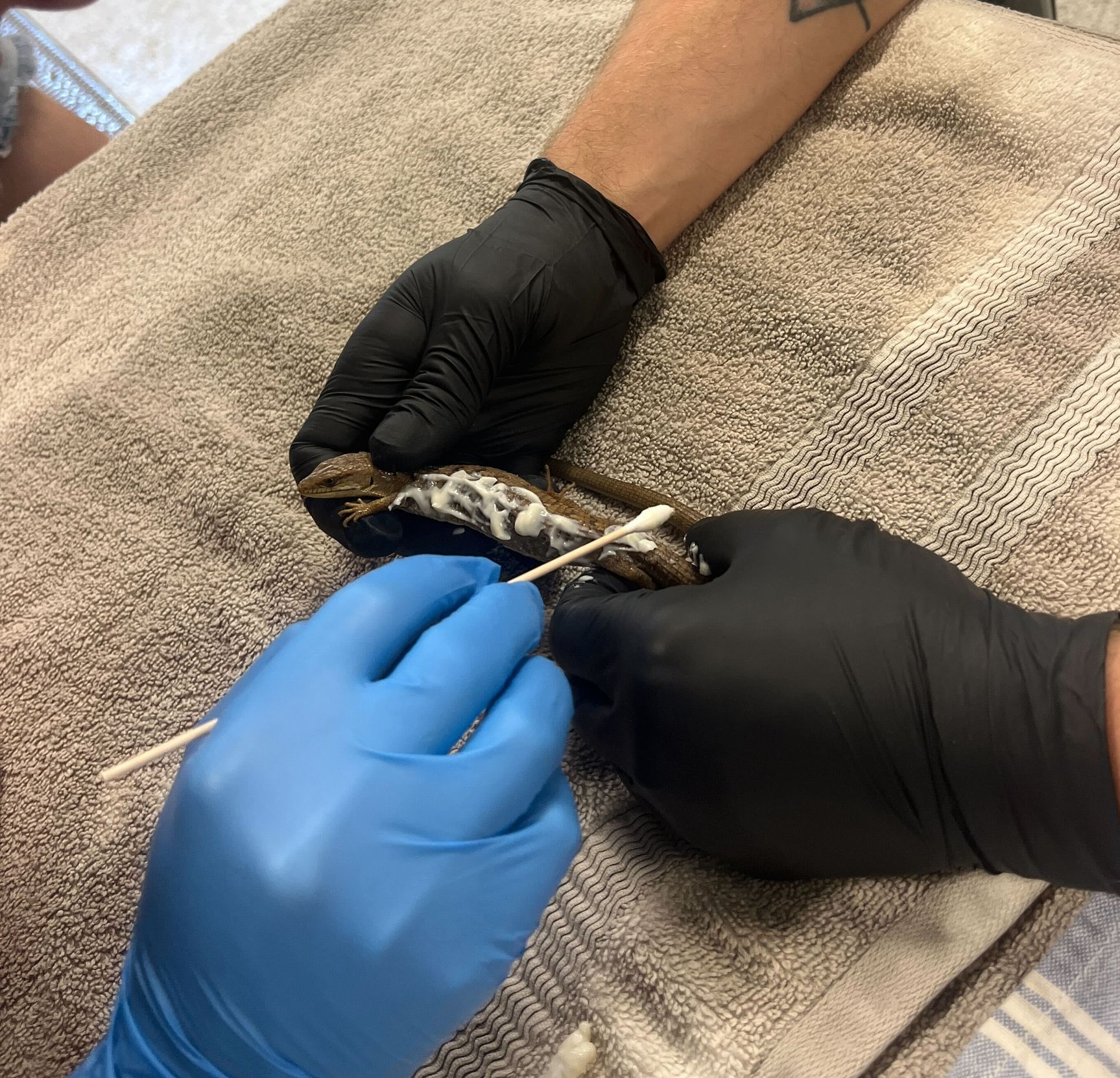
Patient 2684 was brought into our center immobile and stuck to a glue trap. These upsetting forms of pest control are a common sight in our center as they entrap small wildlife indiscriminately. For alligator lizards, whose diet of insects and even small rodents, a glue trap is not only a competitor in their ecological niche but also a Siren’s call. Our staff got right to work releasing 2684 from his trap using a mixture of mineral oil, eaze off, and chinchilla dust (a fine drying powder). Simply getting patient 2684 off the trap was not the extent of his treatment. After being freed our staff made sure that 2684 was free of all glue with mayo washes to absorb any lingering residue, and that he properly shed any remains of trauma before releasing him once more to the wild.
Southern Alligator Lizard Facts:
- Alligator lizards got their names because the back and belly scales of these lizards are reinforced by bone, as they are in alligators.
- An alligator lizard's tail is often 1.5 to 2 times the length of their body. Like many lizards, they can drop it when threatened.
- Unlike many reptiles that go completely dormant, southern alligator lizards can be active on cooler days, especially in spring and fall.
- If you're out and about in California, keep your eyes peeled as they are well adapted to both the wilderness and to urban neighborhoods.