


Searching for space to roam
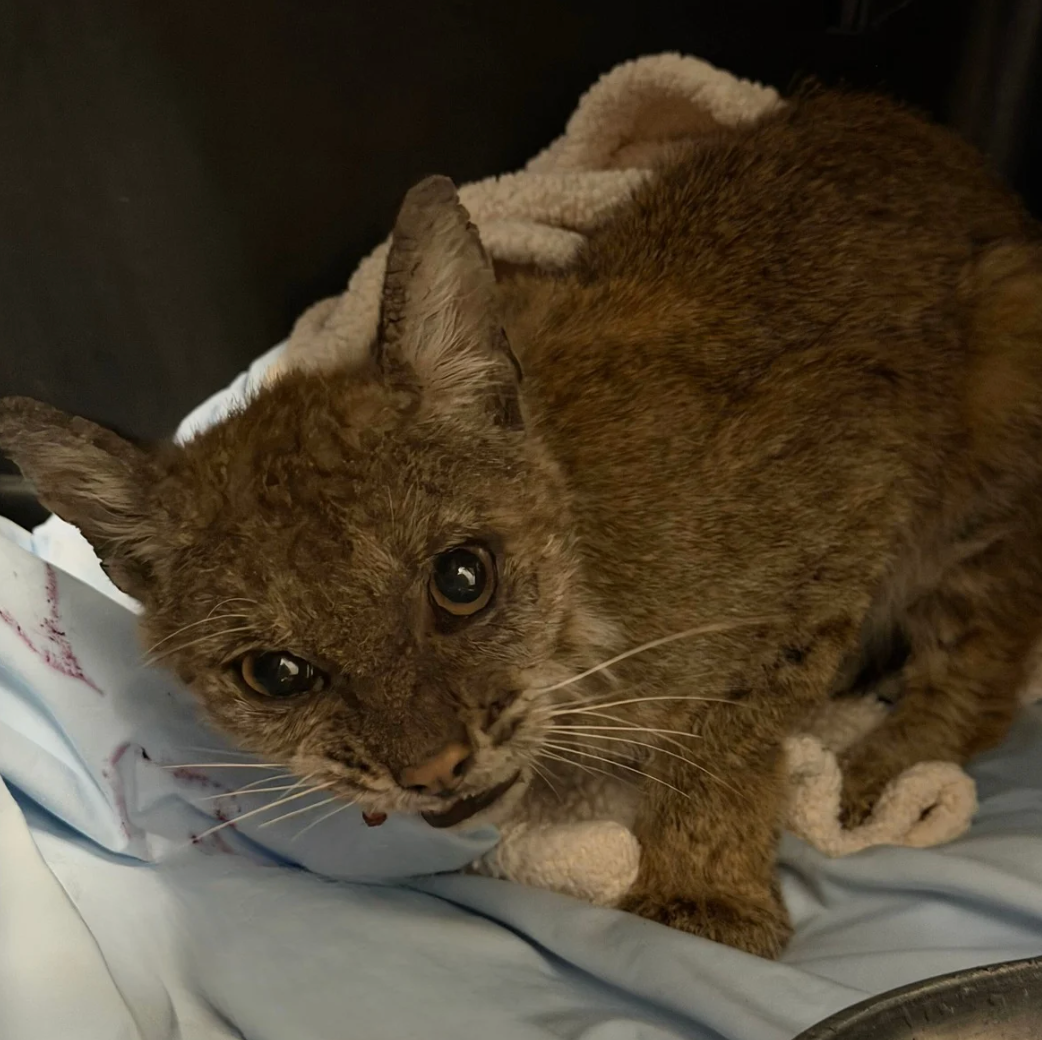
26-4049 is a male bobcat who came into our center July 30th with a case of mange and other parasites. Mange, a skin disease caused by burrowing mites can be fatal if left untreated and 4049 came to us emaciated with other underlying conditions associated with a compromised immune system. Our team noted that once in care, the bobcat remained alert, wary, and skittish, a silver lining for a very ill patient.
Since being in our care, he has continued to be wary and attentive, a good sign that his recovery is progressing well. He will be in our care until we feel confident to transfer him to another facility where he will be in pre-release, a larger space where he builds muscle and confidence before returning to us for his return to the wild.
Currently we are raising money to build a pre-release space of our own so that we can keep larger mammals like 4049 through their care from rescue to release.
A flightspace of his own
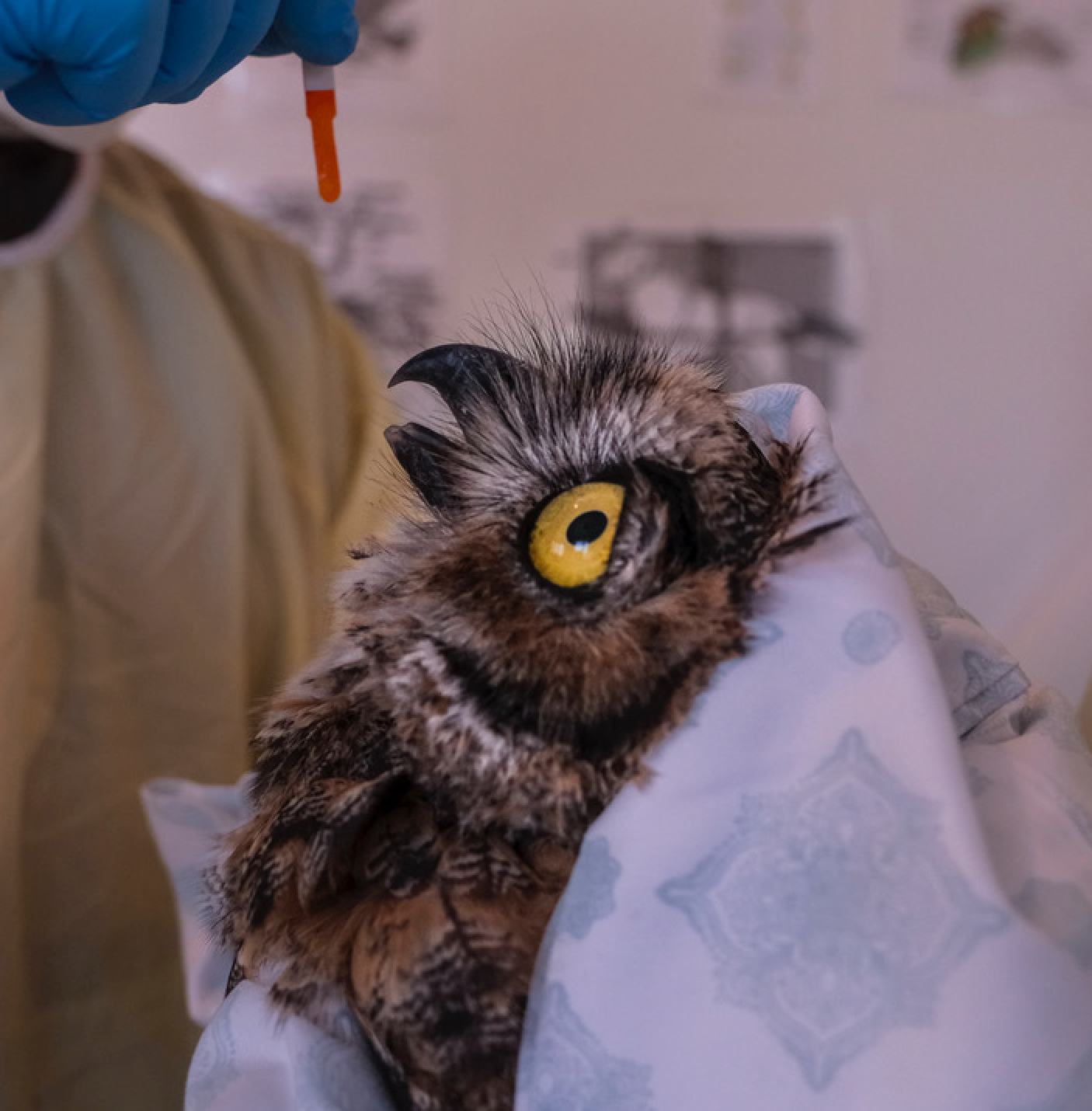
Trapped in a chimney, Great Horned Owl 3825 was rescued and transported to our hospital by staff who climbed onto the roof and fished him out. Based on the owl’s level of emaciation and information from our reporting party, it was clear the owl had been trapped for a while.
The rooftop rescue was only the beginning. Now known by his patient number, 3825, his injuries were stabilized, wounds cleaned, and hydration and nutrition restored.
3825 is still in care. With a little more time he will be strong and stable enough to transfer to a rehabilitation facility with the flight space to thrive.
A trifecta of growing pups
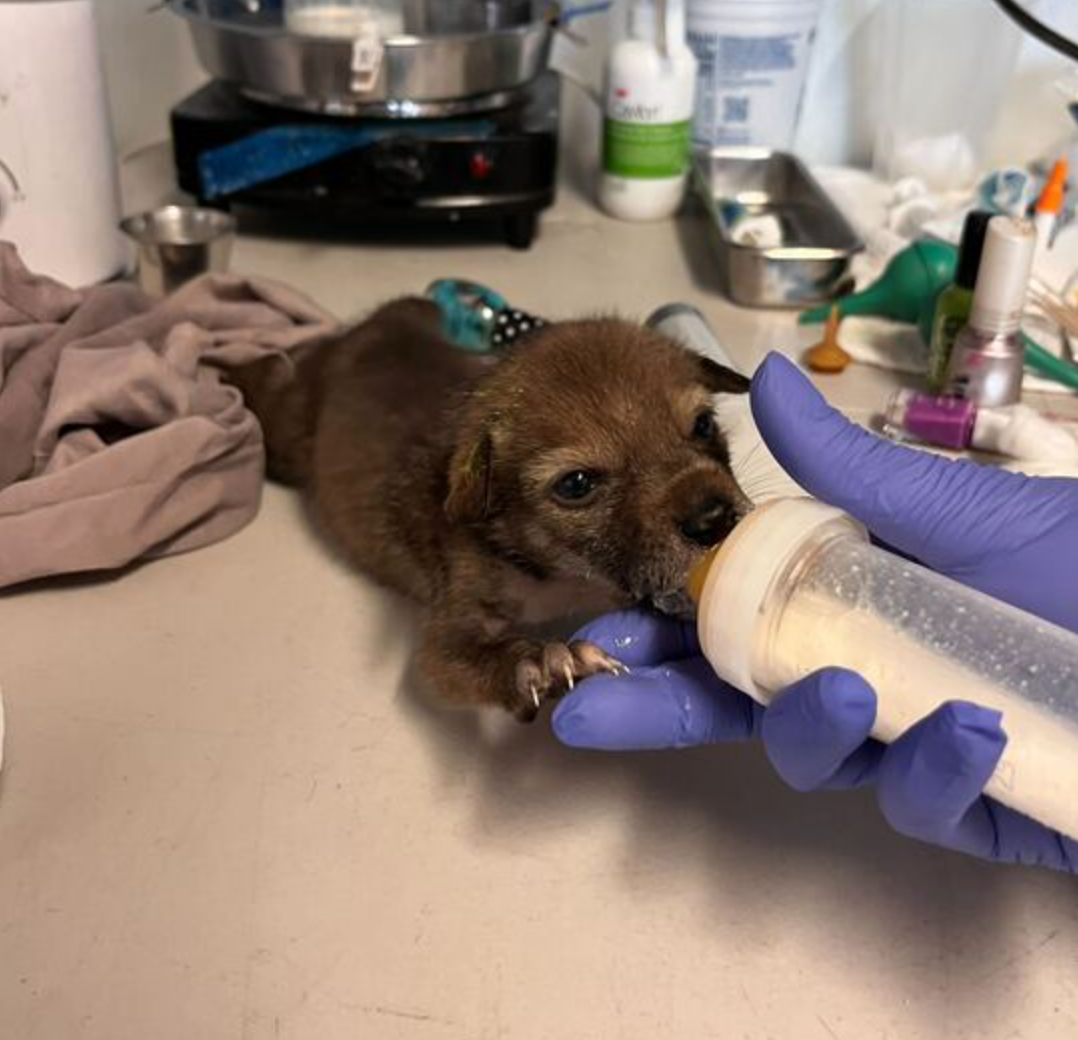
A litter of coyote pups were brought in after being found orphaned. These pups were neonates when they were brought in and among the first coyotes we have cared for since infancy.
Because they had come to us so young our center was able to support these pups for three long months. A month after their arrival to our mammal nursery they were energetic and grown enough to move to our mammal enclosures.
As they continued to grow we made the decision to transfer them to a large mammal facility equipped to care for them during the next stage of their lives so that they would have the best care until release.

